
By Kennedy Blair Miller
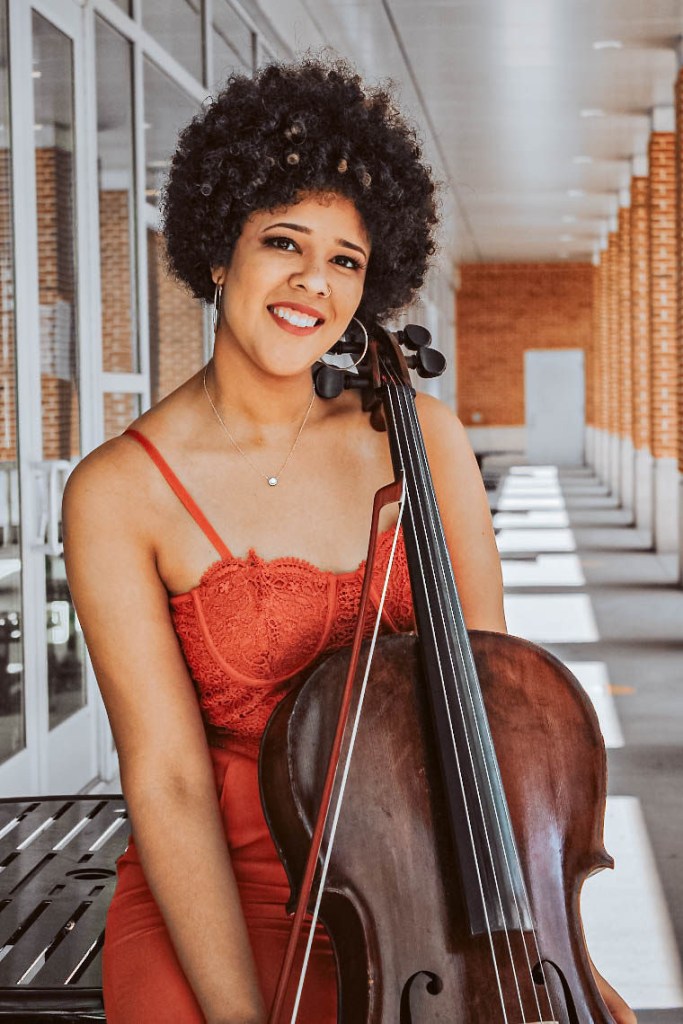
Josie and I step out of a pub on Marylebone High Street and let out a unified sigh at the pelter of rain and the sharp touch of wind. “Did you know it’s already like 70 degrees back home?” I ask Josie, relieved to be talking to a friend who understands Fahrenheit and who is also from Southern America. Josie’s home is Tennessee, the next-door neighbour to my beloved North Carolina. We both studied music at public universities in our home states. She graduated from the University of Tennessee, Knoxville in 2021, and I followed a year later at the University of North Carolina, Chapel Hill. Josie was my first friend at RAM, and our conversations are antidotes to my occasional homesickness. Our conversations also serve to challenge and push me. As a black female cellist, Josie’s experience of the classical music world has been very different from mine. We’ve spent the previous hour sipping wine and unpacking her experience in the UK now that she’s on the brink of completing her Master of Music (Performance) in Cello. First, I wanted to draw on her four years in Knoxville.
Tell me about the work you did in your undergraduate degree.
“I co-founded the Black Musicians Alliance. It’s an organisation basically to create a safe space for black musicians at UTK and also to highlight black composers and black musicians. We do a spotlight series every single week called the Brown Artist Series which provides pictures, links to music, and information about brown composers that people might have not heard of before. And we do an event every February called Black & Boujee, where it’s exclusively black performers performing black music.”
What’s your experience at RAM been like?
“It has definitely not been easy… I figured out there are nine black people out of the entire student body. If you come here as a person who is non-white, and especially if you’re from a low-income background as well, you will be in for a cultural shock. But to say all that, I love my teacher, Felix [Schmidt]. He has been super supportive about everything that I want to do, the music that I want to play, and just me as a person and as a cellist. It definitely has its highs and lows, but as a marginalised person it has definitely not been easy being at one of the most conservative and white institutions in the UK.”
In January of this year you performed in the Students Create Festival. Can you tell me about the project and the quartet you performed in?
“The title of our project was called Unapologetic. Basically what we did was have every member of the quartet choose a piece that they felt reflected their identity, because we were all from either queer, female, or black backgrounds. We played the first movement of Adolphus Hailstork’s String Quartet No. 3, which is one of the most beautiful pieces I’ve ever heard. A lot of his pieces are based on spirituals, hymns and church music. Then we played Nico Muhly’s Stride, which is a bit more contemporary/modern with a lot of funky rhythms. Then we played Caroline Shaw’s Blueprint. She’s becoming more well-known now, and the piece is kind of like a mix between Beethoven and some more extended techniques and weird juxtaposed rhythms. We were also all dressed in ways that represented our cultures…that was another element that we wanted to hone in on, that people can look like us and perform this music, but you don’t always have to be in concert black. You can wear what expresses you as a person because that’s what music is meant to do.”
How do you find empowerment in a style of music that is traditionally (and often presently) disempowering to marginalised identities?
“In my undergrad I really focused on writing these proposals or physically instituting change. But coming to RAM I realised I can actually use my music, and that’s even more powerful. When we did the Students Create Festival, we all played new music; all the composers are still living and they are all from underrepresented backgrounds. The audience was of course majority white, but the programme was still very well received. I think a lot of the time people underestimate the audience of classical music…people do want to hear new things, and there are a lot of new things that are beautiful or by underrepresented people that just haven’t had the opportunity to be heard. So I think I stay empowered by really trying to combine my activism with my playing, and I think that has been more powerful and fulfilling for me than sending a bunch of emails or fighting with administrations, because I feel like that has made more impact and people have more noticed what I’m doing. I feel like those are the small seeds we need to plant.”
Do you struggle to find a balance between your identity as a cellist and your identity as an activist in music?
“I think honestly I’m still trying to figure it out because it is really hard. When I walk into a room the first thing people see about me is I am black, and so people just assume I’m going to be an activist. So, I don’t think there’s ever a moment where I can just play the cello. So even though, yes, this work is needed, at the same time I kinda just want to learn my instrument and get better at it. At the same time I want people to know that about me, because I want a little black kid to see that they can do this, because they can play music by people that look like them and they can be in an orchestra if they want to.”
What were the culture shocks moving to the UK from the US?
“I strongly identify as a Black American, but a big culture shock coming here is that being black has a different connotation to it, and so does racism. There’s a lot more subtle racism here than, say, in America, especially in the Deep South… [which] was kind of a shock just because I’d only experienced it one way or the other. Of course microaggressions persisted, but I think British people are a bit more complacent sometimes with how they approach racism and talk about it. I think other than that, I love living in a big city. I’m from a small town, so this is great, especially for music. I’ve met so many cool people and done so many cool gigs and had so many cool experiences. It is a completely different culture, but at the same time I feel like I am pretty independent, so now I feel like this is my home.”
You’ve mentioned your passion for playing music by underrepresented composers. Who are some of your favourites?
“I really love Adolphus Hailstork. I know I’ve mentioned him a lot, but his music is beautiful. It’s very tonal, it’s easy to listen to, and it’s just all based on hymns and spirituals, so it’s just beautiful. I’ve played it for a lot of audiences and it’s been very well-received. [I love] George Walker as well and William Dawson; I did his Negro Folk Symphony with Chineke! Orchestra, which was really amazing. These are mainly black composers. And Caroline Shaw – she’s becoming a bit more mainstream, but she’s also amazing. I think those are the main ones that I’m focused on right now. I’m still learning and discovering and finding new pieces and new composers as well. There’s so much out there.”
What is next for you after graduating this summer?
“I do plan to stay in London and freelance and keep teaching. And then potentially in a few years go back and get my PhD because, even though I still do want to perform and play cello, I do want to work on instituting ED (Equity & Diversity) change, especially at a higher education level…making students of colour, low-income students, anyone from marginalised backgrounds feel that they can succeed and that they are welcome and that conservatoires are a safe space for them.”

 RAMpage