
By Emily Trubshaw
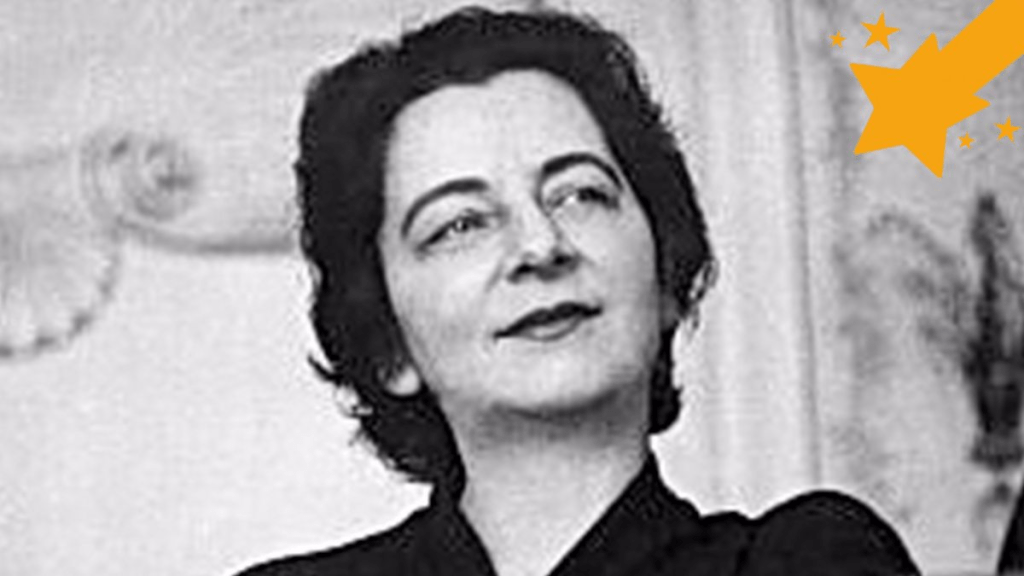
Although many YouTube comments are encouraging and supportive of Polish composer Grażyna Bacewicz’s music, there is also a wide spread of those that criticise her ability to produce more than just a well-executed musical structure. Rather than moving her audience, Bacewicz is often perceived as being clinical and unoriginal. ‘Her generativity lacks a single pivotal idea or sensibility’, writes one particular YouTube user; one wonders, though, whether this opinion is a reflection of the music itself, of the composer’s marginalisation as a Polish female composer. Today, it has become something of a habit to continually compare works to classical favourites by the so-called ‘greats’ – Beethoven, Mozart, Haydn, the majority of whom were extremely innovative for their time. Other composers, whose styles are perhaps more conservative, lose their footing in the race for survival as audiences fail to grant them the privilege of their time and genuine consideration. Although Grażyna Bacewicz was widely acknowledged both nationally and internationally during her own lifetime, like many other female composers, her name seems to have become overlooked.
Taught by the likes of Karol Szymanowski, Carl Flesch, and Nadia Boulanger, Grażyna Bacewicz was a child prodigy and quickly established herself as an outstanding composer, pianist, and violinist. Antithetical to any notion that her music is bland and timeworn, her compositional style changed dramatically over the course of her life, originating initially in the late-Rromantic, impressionist traditions, before turning towards French neoclassicism, and finally exploring twelve-tone techniques, aleatorism, and other colouristic experimentation during the 1960s.
Of course, Bacewicz lived through an extremely harsh century of violence and oppression, which undoubtedly shaped her musical output. Most notably, her delayed response to avant-garde techniques and fashions arose from the ideological control of creativity during the Stalinist period in Poland, which only began to ease around 1956, following the stirrings of political and social unrest such as the Poznań protests. Whilst one might therefore regard her earlier works as backward-looking, and unrevolutionary, in the context of Cold War oppression, Bacewicz helped to fill a creative and cultural vacuum. Though ‘approved’ by the Communist authorities, she pushed the boundaries of Stalin’s laws, finding a balance between a contemporary musical language and the careful artisanal sculpting of existing and native traditions. For me, her work epitomises progress; by finding individuality in the old and bridging the gap between numerous musical genres, she provides fresh perspectives and leads us toward new, innovative art forms, generating her own underground creative revolution.

 RAMpage