
An interview with Nicolette Moonen and Ruth Phillips
By Emma Baird
Nicolette Moonen, professor of Historical Performance at the Royal Academy of Music, London, is a Baroque violinist and the founder and director of The Bach Players. She is also a certified Feldenkrais practitioner.
Ruth Phillips is a Baroque and modern concert cellist, writer, performance coach, yoga practitioner, and mindfulness teacher. She is also founder of The Breathing Bow and co-founder of InsideOut Musician.
In this combined interview, Ruth and Nicolette share their insights on topics including Feldenkrais, holistic approaches to instrumental playing and teaching, mindfulness, mental health, and unlocking one’s innate artistry.

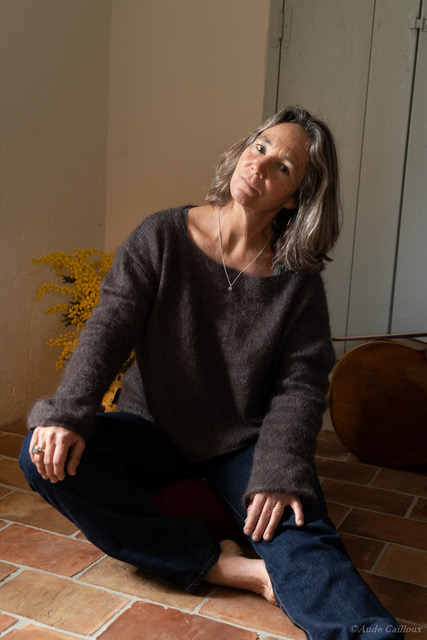
Emma Baird: ‘How would you define the Feldenkrais Method, and how might classical musicians benefit from regular practice?’
Nicolette Moonen: ‘The method was invented by Moshe Feldenkrais while trying to cure his own knee problems. It led him to explore how the body works. For him, there was no distinction between body and mind. A body does not exist without a mind, so he never talked about the ‘body’ but used the concept of the ‘self’. We mustn’t split ourselves up! This method goes against the traditional education models of ‘copy me, and you will be perfect’. On purpose, the teacher does not demonstrate. They give verbal directions which invite you to become curious about the way you move and what you feel. In Feldenkrais, we learn how we learn. As babies, it is our sheer curiosity that gets us to move and discover the world. We learn to eat, walk, and talk in a very nonlinear way! These are hugely complex skills. What Moshe Feldenkrais could see is that we learn them not with a teacher, but through exploration and by sensing ourselves. With violin technique, I used to think ‘if I do this, I’ll get here, like A to B to C’. It didn’t work like that!’
Emma: ‘Why is developing this degree of bodily awareness important for instrumental players?’
Ruth Phillips: ‘I went to the Yehudi Menuhin School when I was eleven. I had a wonderful time because I had great friends there, but it was an extremely high-pressure and judgmental environment. There was no talk about the body; I learned how to play the cello with my head and my hands alone. I see this all the time with students now. The thing is, the body does it so much better when it’s not being bossed around by the mind! We move much more beautifully when we just allow. Many of the people I see in the colleges are so crippled by messages of self-loathing that they are unable to find the stillness to listen to how they physically feel on the inside or how their body wants to move. For them, for example, ‘the arm’ remains a concept, an idea rather than an actual sensation. What I try to teach is that the body is our instrument.’
Emma: ‘How might instrumentalists begin to develop, or return to, a natural ease of movement? To what extent does our system of classical training conflict with this ideal state?’
Nicolette: ‘In Feldenkrais classes, we give movement directions and may ask ‘Where could you do less?’ and ‘What is happening with your breath?’. It is against our whole education system and our social conditioning to say ‘make it easier’ instead of ‘try harder’. Many students are deeply conditioned to think that they need to micromanage their playing. I will often ask them to tell me a story and focus their attention on how their lips move and what their tongue does. They discover that it becomes very difficult to speak. I see the same thing happening in music-making. It’s like you get a stutter. As soon as the music becomes central in our minds, the technique starts looking after itself.’
Ruth: ‘I experienced a similarly problematic approach during my further studies in Germany with Johannes Goritzki. I remember spending hours and hours analysing the movements of a bow change, for example. Therefore, every time I got to the end of the bow, it was as if I had to do this amazingly complicated manoeuvre. My head was just so full of information, and my music so black with markings there was no space left to listen or respond.’
Emma: ‘Can this concept of natural bodily intelligence also be applied to one’s musicality? Is artistry also innate?’
Ruth: ‘I believe it is. I was playing a Bach suite the other day for about the seven hundredth time, and I realised how new it is to me every time I play it! One really has to avoid having an interpretation and ask ‘How can I get myself out of the way? Can I step back and allow myself to respond?’. Obviously, we have to control things to an extent, but one of the big keys for me is the relationship between control and non-doing. How many impulses do we need to give? How many thoughts do we actually need to have? I believe creativity happens in the space. There is a beautiful quote by the yoga teacher John Stirk: he says that the pause at the end of the exhale is where the soul lives. That quiet place is where the magic happens. That is how you can play a piece for the hundredth time and still feel like you are walking through a completely new landscape.’
Nicolette: ‘In classical music, we have this idea of ‘interpretation’. I think having a fixed interpretation of a piece is nonsense. You have to understand the piece, yes, but every day is different. It is like giving a speech or a lecture. It would be very boring if the person tried to repeat it exactly as they did yesterday. But when it’s alive, it is as if they are living it. Accessing the imagination does not require effort – it requires allowing. Allowing is non-doing. We can simply be open and available for it, so the music just moves through us and we get out of the way. Once we experience this, we realise it is easy and so far away from all of that ‘efforting’. I often ask a student to play the same passage several times, making it different each time. It is a way to experience this allowing of the musical imagination to take over. Furthermore, after almost twenty-five years of teaching conservatoire students, I know that as soon as I ask them to sing what they are about to play they become profoundly and naturally musical. The musicality is innate. The problem is that there is often a huge discrepancy between the innate musicality and the actual playing.’

Emma: ‘What advice would you give to musicians who feel burdened by self-judgement, and the tensions in mind and body which arise as a result of this?’
Ruth: Even just having the instrument close can bring up judgemental and uncompassionate thoughts. One exercise I teach during my workshops is to get the player to sit very quietly, finding grounding and release. Then, I get someone to take their instrument and move it around the player. The person sitting observes what happens in their body and which thoughts or emotions arise. Often, there is judgement, physical tension, anxiety, aversion…and even tears can come up. It is absolutely crucial to become aware of the type of language we use towards ourselves. Here is a subtle example: I play something out of tune. My message to myself is ‘that was out of tune’. What does this statement do? It is actually a judgement which carries absolutely no information, which leads to tension and confusion. Instead, I could use observation: ‘That was flat because I didn’t prepare enough of a backswing for the forearm to fall far enough’. It is our teachers who teach the language in which we learn to speak to ourselves. We internalise our teachers’ language. The teacher-student relationship is as powerful, I think, as that of parent to child, or therapist to client.’
Emma: ‘Could you both elaborate on the importance of delving into fields outside of classical music in order to inform your teaching approaches and philosophies?’
Nicolette: ‘I did half of a yoga teacher training course before I moved to the UK in 1992. I subsequently did a foundation year in person-centred counselling, which was brilliant. This type of counselling is inspired by the work of Carl Rogers, a pioneering twentieth-century psychologist. His thinking was that the client has all of the answers to their issues within themselves. The therapist’s role is to facilitate self-discovery by providing the right conditions. Moshe Feldenkrais knew Carl Rogers, and the Feldenkrais method is also person-centred. Since I began teaching Feldenkrais, I have hardly demonstrated in violin lessons. I mostly ask questions. I am there to facilitate the students’ own discoveries, and let them become their own best teachers.’
Ruth: ‘I have always been interested in the wave of the breath, which sparked my journey because it seems to shine a light on the various aspects of instrumental playing. I am interested in maintaining the balance of inner and outer, giving and receiving, opening and closing, inspiration and expression. Posture is also affected by the breath. For example, the spine gathers during the inhale and it lengthens on the exhale. Usually, as performers, we are stuck in one extreme, either over-extension or over-flexion. In Buddhist philosophy, I find this closely related to two of what are called the three poisons: grasping and aversion. In the middle, and in the continuous flow between, we can find equanimity and balance.’
Emma: ‘What are your final thoughts on the future of wellness in classical music?’
Ruth: ‘An incredible amount of trauma has occurred within classical music, but I have incredible faith in your generation. There is a curiosity, openness and desire for a shift that we didn’t have when I was younger. It is important that we as musicians have the space to be as we are.’
Nicolette is offering free Feldenkrais sessions to RAM students on Thursday afternoons at Steiner House. These sessions are available to book on Asimut.

 RAMpage